
29 May 2026
AI-ready websites: why your site will need to talk to agents
AI agents increasingly browse the web instead of people. We explain what an “AI-ready” site means — structured data, llms.txt and WebMCP — and why it's becoming a search and competitive lever.
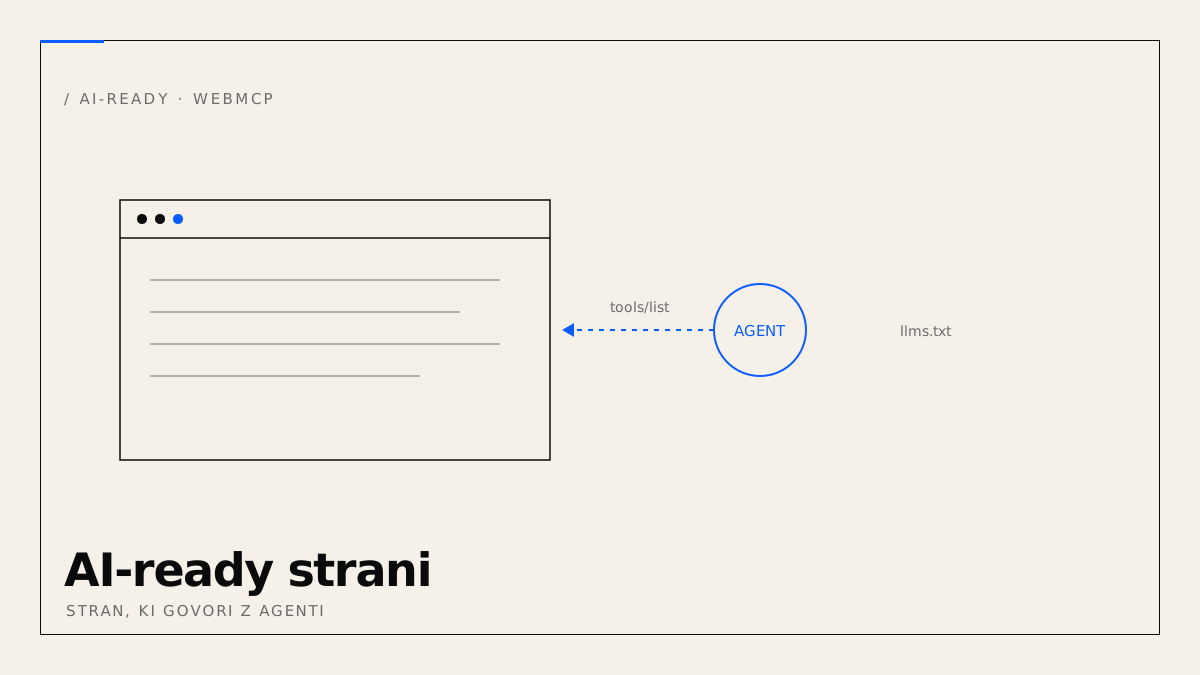
A growing share of visits to your website no longer comes from people but from AI agents — assistants that read, compare and summarise your offering on a user's behalf. At the same time, search engines increasingly show an AI Overview instead of ten blue links. The question is no longer whether AI will read your site, but how well it will understand you.
What “AI-ready” means
An AI-ready site has three layers:
- Structured data (JSON-LD) — so an agent reliably recognises who you are, what you offer and how to reach you. No guessing from the design.
llms.txt— a short, readable map of the site written for language models: what's where and what matters.- WebMCP — a set of tools the agent can call directly on the page: read your services and products, fetch contact details, submit an inquiry. Structured, not HTML scraping.
Why it matters now
A classic site is built for the human eye: images, animation, layout. An agent doesn't “see” any of that — it reads the source and guesses. Give it structured tools and it stops guessing and starts calling: faster, more reliable, fewer errors. A site that allows this has the edge in agentic search — just as sites optimised for Google had the edge twenty years ago.
What to do
- Add clean JSON-LD (organisation, services, products, FAQ).
- Publish an
llms.txtwith a map and links. - Embed a WebMCP server with safe, read-only tools and inquiry submission.
Our approach
Every site we build is AI-ready from day one — including a WebMCP server and llms.txt. We add the same integration to existing sites too.